Experience & Tech
SEO Beyond Google: Navigating Multi-Platform Discoverability
Published on: April 16, 2026
5 Mins Read
Wahyu Afrizal
Sr. SEO Specialist at ALVA Digital Network
Share on

SEO has traditionally felt like a game played exclusively on Google’s field. For a long time, the standard strategy was to rank high on the first page and wait for traffic to follow. But today, focusing only on those blue links means missing a much bigger opportunity.
User behavior has changed. People are moving toward AI platforms for quick summaries, TikTok for recommendations, and marketplaces for shopping.
So, how do we ensure a brand stays visible in this new landscape? It is time to rethink SEO as more than just a ranking on Google.
The Evolution of the Search Landscape
We often see ‘SEO is Dead’ headlines popping up on social media. It is certainly true that the arrival of AI Overviews and chatbots has changed the look of the search results page.
However, the reality is that SEO is simply moving into a more interesting phase. SEO isn’t dying, it is evolving.
If a strategy relies only on “gaming the system” or using shortcuts to trick an algorithm, then that version of SEO is indeed dead. For brands that focus on white-hat techniques, long-term growth, and genuine user experience, the opportunity has never been bigger.
AI Overviews and chatbots are just new ways to deliver the answers users need. The goal remains the same, but the places where people find answers have multiplied.
A Strategic Framework for Platform Selection
This shift leads to a new question: with so many platforms available, does a brand need to be present on every single one?
There is no need to be everywhere at once. The smartest approach is to use data to decide where to show up:
- Audit the audience: Look at who they are, their daily habits, and what they are actually looking for.
- Check the data: Use GA4 to see where traffic originates and Google Search Console to find the specific queries that lead people to the brand. Even TikTok Insights now offers a look into the specific questions driving discovery in certain niches.
By analyzing these touchpoints, it becomes clear which platforms deserve the most attention. Depending on the business goal, the starting strategy might look like this:
- To build demand and capture intent: Focus on Google + TikTok + YouTube.
- To drive fast transactions: Focus on Google + TikTok + Shopee.
- If resources are limited: Start with Google first, then add TikTok as a discovery engine.
How to Win Every Channel
Understanding why someone chooses one platform over another is the first step toward visibility.
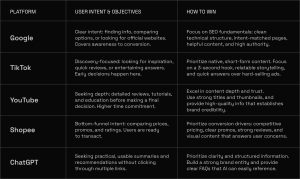
In Indonesia, search habits are often spread across these five platforms, and each one needs a specific approach to be effective. Here is a breakdown of the current landscape:
Adapting Content for the Right Context
As shown in the table above, every platform needs a different treatment. Simply mirroring content or using a direct repurposing method rarely works because people approach each platform with a different state of mind.
This is where content adaptation becomes essential. The concept involves taking one core message and tailoring the delivery to fit the specific medium.
A single topic can be used across various platforms, but the format, depth, tone, and call to action must be adjusted to feel natural to the user.
For example, a guide on a complex topic might start as a full article for Google. That same idea can then be broken down into a short, relatable clip for TikTok or a more detailed walkthrough for YouTube.
Then, the main benefits could also be turned into visual cards for a Shopee listing, along with a structured explanation to help with discovery on AI platforms. This approach keeps the core message consistent while making the format fit the platform perfectly.
Navigating the Challenges of a Multi-Channel Strategy

Shifting to this broader view often brings up internal challenges that are more about mindset and work habits than technology.
The primary obstacle is the single-channel mindset. This happens when a brand is so used to the Google ecosystem that it tries to apply the same content formats and metrics to every other platform.
But how does a team handle the increased workload? Managing more channels naturally splits resources and makes tracking success more difficult.
Since not every interaction leads to an immediate click, the SEO team can no longer work alone. It now requires a combined effort with social, creative, and e-commerce teams to keep the brand’s presence consistent.
Beyond team structure, staying relevant also means keeping pace with how search technology itself is changing.
Emerging Search Behaviors to Watch
As technology becomes a deeper part of daily life, new ways of searching are growing quickly. These formats are often underestimated, but they are changing how people find information:
- Short-video search
Platforms like TikTok, Reels, and YouTube Shorts are no longer just for entertainment. Users are increasingly turning to them for quick tips, reviews, and tutorials. For many, this has become a primary search layer rather than just a social feed. - Visual and conversational search
People are moving toward more natural methods, like searching with a photo, a screenshot, or a voice command. These conversational questions are often faster and more practical for the user than typing traditional keywords into a search bar.
The Mindset Needed to Win
SEO is no longer just about a ranking on Google. It is a broader effort to build brand visibility wherever people are looking for answers.
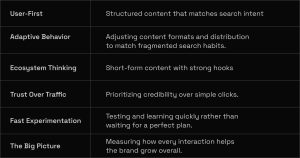
This transition requires a few key shifts in how a team approaches their work:
The Future of Search is Multi-Platform Discoverability
Today, viewing SEO purely as website optimization is a perspective that is quickly becoming outdated. As search habits spread across different apps and tools, the focus must shift toward making sure a brand is found and trusted wherever a question is actually asked.
Staying ahead requires following the user journey instead of just chasing a single algorithm. Ultimately, the goal is to move beyond a high ranking on one platform and embrace the true future of search: multi-platform discoverability.
Wahyu Afrizal
Sr. SEO Specialist at ALVA Digital NetworkWahyu is an SEO Specialist experienced in keyword research, content strategy, and SEO audits. He combines analytical thinking with a structured approach to boost visibility.