Media
Memory: The New Currency of Media Planning
Published on: June 13, 2026
5 Mins Read
Runi Tamara
Digital Planning Manager at ORCA
Share on

For years, media planning has been built around one question: How do we get more people to see our brand?
Today, that question may no longer be enough.
Brands have more channels, formats, and media opportunities than ever before. Yet consumers are also exposed to countless messages every day, making visibility remarkably easy to forget.
Visibility is still important. It helps people notice a brand. But it is only the starting point.
Being seen is no longer the hardest part. The bigger challenge is whether anything stays with consumers after they’ve seen it.
And that shift may redefine how we think about media effectiveness altogether.
The Gap Between Visibility and Memory
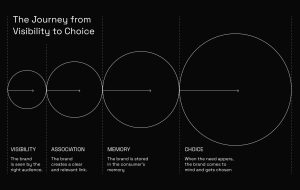
The gap between being seen and being remembered is becoming increasingly difficult for brands to ignore.
Consumers move quickly across platforms, constantly exposed to new content and messages throughout the day. In this environment, successfully appearing in front of the right audience does not automatically mean a brand will be remembered.
There is another factor at play. Many brands have become focused on showing up across as many channels and touchpoints as possible, yet visibility alone does not guarantee impact.
Consumers may see the same brand several times, but if the message or association is not strong enough, those interactions do little to create lasting memory.
Without clear brand associations, even repeated exposure can become easy to forget.
Memory Shapes Future Choice
This gap matters because visibility alone rarely drives long-term growth.
Not every consumer is ready to buy the moment they encounter a brand. Many purchase decisions happen long after the initial exposure, when the category becomes relevant or a need eventually appears.
If people remember the brand at that moment, there is a greater chance they will think about it when making a decision.
So media planning should extend its focus beyond immediate results or awareness in the moment. It should also ask a different question: In what moments do we want this brand to be remembered later?
Because consumers do not always choose the brand they have seen most recently. More often, they choose the brand that comes to mind when the need arises.
Planning for Memory
If memory becomes the objective, the role of media also changes.
Media planning should no longer focus only on immediate results. It should also increase the likelihood that the brand stays top of mind when people are ready to make a purchase.
That means media is no longer only about helping brands reach consumers. It is also about helping them show up at the right moments, with the right message, so those interactions become easier to remember.
One way to achieve that is by creating multiple entry points back to the brand. Consumers may discover a brand through different channels and at different moments, so each interaction should reinforce the same message and association.
The goal is not to be present everywhere. It is to create consistent experiences across the moments that matter, so the brand becomes easier to recall when people are ready to make a choice.
This also doesn’t mean brands have to choose between performance and memory. They simply work on different timelines. Some campaigns are designed to drive conversion today, while others help ensure the brand is remembered when people are ready to buy later.
Rethinking Media Effectiveness
As the role of media evolves, the way brands evaluate effectiveness also needs to evolve.
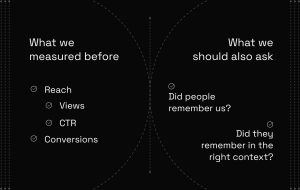
Metrics such as reach, views, click-through rates, and conversions remain important. They provide valuable signals about campaign performance and whether a message is reaching the intended audience.
But they should not be the only indicators of success.
Brands also need to understand whether the brand is remembered, and whether it is remembered in the right context.
The question should move from, “Did people see us?” to also, “Did they remember us, and did they remember us in the right context?”
The Competitive Advantage Algorithms Can’t Create
As media becomes increasingly fragmented and algorithm-driven, memory becomes an even more valuable competitive advantage.
Today’s consumer journeys are rarely linear. A person may discover a brand through social media, encounter it again through creator content, search for it later, and eventually make a purchase through an entirely different channel.
As consumers encounter brands across more channels and moments, consistency becomes increasingly important. The message and association they take away should remain clear, regardless of where the interaction happens.
The more fragmented the media landscape becomes, the more valuable it is for brands to build clear and consistent associations that consumers can easily recall when a relevant need appears.
This is why the conversation should no longer focus only on where audiences are. It should also ask when brands want to be remembered.
The Next Challenge Is Being Remembered
We have become very good at making brands seen. But the next challenge is making brands remembered.
And being remembered isn’t simply about showing up more often. It’s about showing up consistently with the right message, to the right audience, at the right moment.
Because at the end of the day, people don’t remember brands just because they see them more often. They remember brands that show up in moments that matter to them.
Runi Tamara
Digital Planning Manager at ORCARuni is an experienced digital marketer known for award-winning advertising strategies. She drives business growth through data-driven digital planning.