Data & AI
Agentic AI Has a 2028 Deadline: Are We Ready?
Published on: April 30, 2026
5 Mins Read
Syafira Izzati
Copywriter at ALVA Digital Network
Share on

By the time 2028 arrives, working without agentic AI will likely feel as outdated as manual data entry feels today. We have a window right now to bridge the gap between our current habits and the way we will soon be expected to operate.
Industry data supports this timeline. According to Gartner, 60% of brands will rely on agentic AI for one-to-one interactions by 2028. About one-third of the software we use for work will include agentic features within the next two years. ini updates will change how we handle our daily tasks.
Organizations meeting this deadline are running pilots today. Rather than rushing, we are giving our teams the time needed to understand how a brand operates ketika systems can take action on their own.
Beyond Chatbots: What Agentic AI Actually Does
Real differences between current AI and Agentic AI lie in the execution. While standard tools are built to respond to prompts, agentic systems are built to execute workflows.
Agentic AI provides a system of action. An AI agent doesn’t just respond to a command. It receives a goal, determines the necessary steps, finds the right tools, and adjusts its actions as it goes.
In marketing, the agents assist with more than just writing a brief: they pull data, check brand standards, and prepare the campaign while we focus on the broader strategy. Work moves forward while we make the decisions.
The Momentum in Southeast Asia

Evidence of this change is already visible across our region. Salesforce data shows that in the first half of 2025, the number of agents put to work by businesses grew by 119%.
Early movers in Southeast Asia aren’t ahead because they have larger budgets. They simply started their learning earlier.
We are using this window to figure out the small details, such as how the technology handles local market data, while we still have the time to test things out. Building our knowledge now allows us to move with confidence later.
A Strategic Framework: 3 Pilot Workflows
Choosing tasks that are repeatable and produce clear results is the best way to start. These three areas provide a solid foundation for our first pilots:
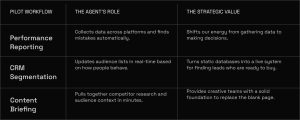
2026: The Window for Practice
We can find success with AI by taking one small step at a time. McKinsey’s research shows that the best results arrive when we start with simple ideas before moving to full-scale automation.
2026 is our time to practice. Testing AI on a small scale allows our teams to get used to a new way of working while keeping our daily operations stable.
Learning now ensures that when agentic AI becomes a standard expectation in 2028, we have already fixed the main technical and risk challenges.
Getting the Foundation Right

We need a clear sense of direction to see real results. Gartner predicts that 40% of agentic AI projects will be canceled by late 2027, often because the vision remained unclear or costs went over the initial plan.
Avoiding these pitfalls requires a focus on three areas:
- Connecting Data: AI agents aren’t effective when they are locked in a single app. They reach their full potential when they can see across our different systems to get things done.
- Prioritizing Intent: Our efforts focus on identifying high-intent leads who are actually ready to engage with us.
- Collaborative Strategy: Shared journeys like this require our SEO, creative, and e-commerce teams to work together so the brand speaks with one voice across every new AI touchpoint.
Focusing on Readiness
Viewing agentic AI as a future luxury is a perspective that is quickly changing. By 2028, the ability to run these automated workflows will be a common requirement for any competitive brand.
Starting now allows us to find our footing while the stakes remain manageable. Our goal is to be prepared when the work environment changes. We want our strategy to be clear and our systems to be steady before the 2028 deadline arrives.
ALVA Digital Network helps brands in Southeast Asia turn AI strategy into real-world results. As we look at the next roadmap, the first step is simple: which specific task should we automate first?
Syafira Izzati
Copywriter at ALVA Digital NetworkSyafira is a storyteller who blends narrative and content strategy to help brands communicate with relevance and impact.